DIY your own womb massage oil
There are many different massage oils out there that are wonderful for the womb and the skin. You can find them easily with a quick Google search, and I always recommend Etsy stores where people create their blends at home and intentionally craft their products.
When I learned Sobada womb massage with Reconexión Uterina, we also learned how to create our own oil—connecting intentionally with the plant spirit, following each step, and lovingly honouring the ritual until the oil was finally ready to be used with clients. If you're drawn to this way of doing things, this guide is for you.
Below you'll find the steps to create your own oil at home. It isn't hard. It does take some time, but it's highly rewarding.
Why cold-pressed organic sesame oil
Cold-pressing means the oil is extracted without heat, so it keeps its natural antioxidants and fatty acids intact rather than having them stripped or altered in processing. Choosing organic, unrefined, cold-pressed oil isn't just a purity preference, it's part of what makes the oil an appropriate vessel for the plant medicine and intention you're about to infuse into it.
Benefits of sesame oil for massage
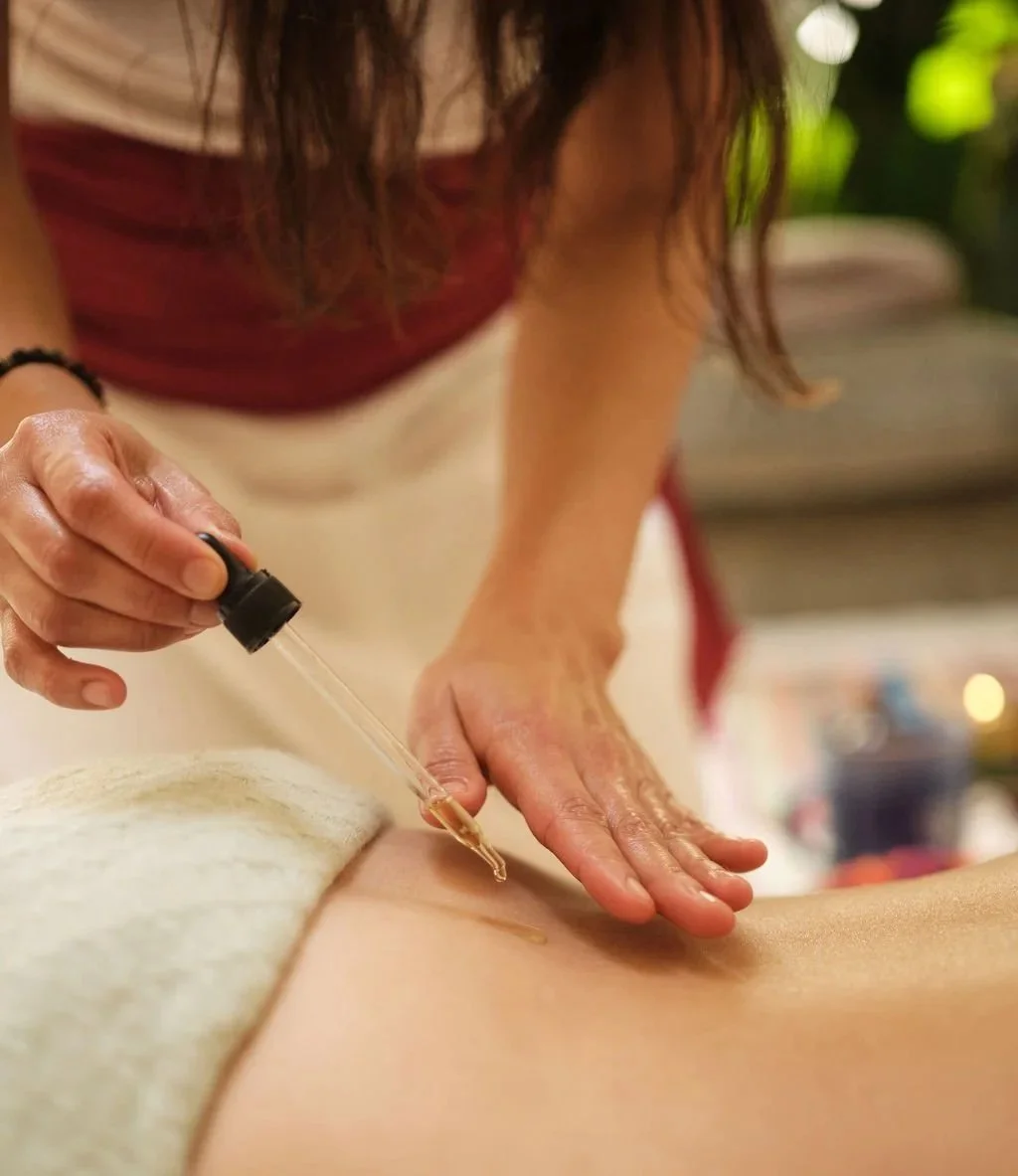
Sesame oil is rich in skin-softening nutrients—fatty acids, antioxidants, and vitamins B and E— which help nourish and repair the skin, and it's suitable for all skin types. It's known for its ability to penetrate deep into the tissues, leaving the skin supple and moisturised rather than sitting on the surface.
Sesame oil massage is also associated with healthy immune support and joint flexibility, and warm compresses with sesame oil over the abdomen have traditionally been used to soothe occasional cramping which is part of why it's such a fitting base for womb-focused work.
It also has practical staying power: sesame oil is naturally stable and resists rancidity thanks to its high antioxidant content, so a well-stored bottle can stay fresh for months.
Artemisia Vulgaris (Mugwort): benefits, and fresh vs. dried
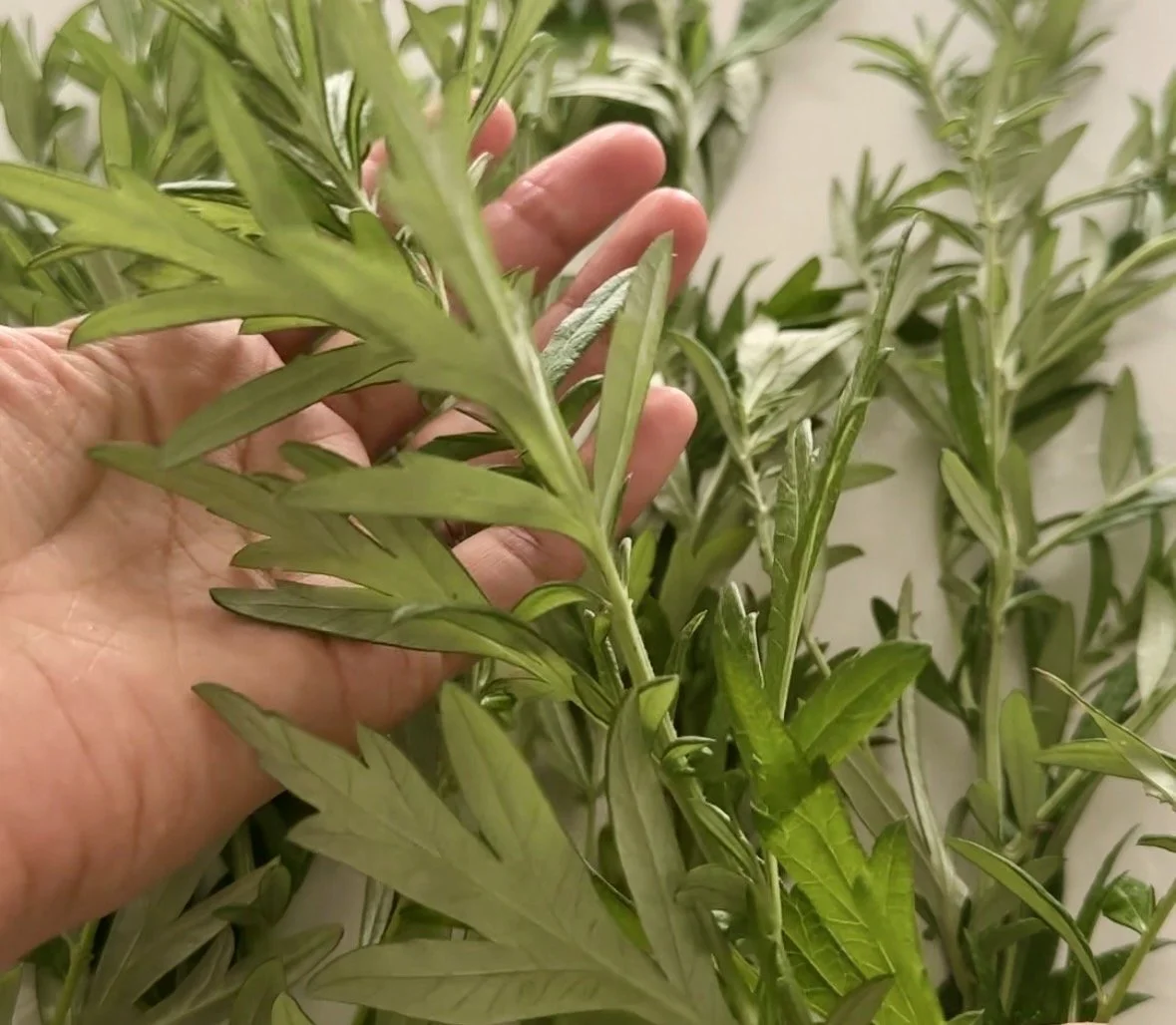
Mugwort has been a woman's herb across cultures for centuries. Its botanical name comes from Artemis, the Greek moon goddess and patron of women, and it carries a long-standing affinity with feminine energy, traditionally supporting women through every threshold from menarche to menopause.
Traditionally, mugwort has been used as a uterine tonic and emmenagogue — an herb that encourages regular menstrual flow, and it has a long history of use for coldness of the womb, irregular or prolonged bleeding, and supporting fertility.
Fresh vs. dried:
Fresh mugwort is what's traditionally used for this kind of oil—crushed and infused while the plant is still full of its own moisture and life force. If you can't source it fresh, dried mugwort works as a substitute; just know the character of the oil will be slightly different, as dried leaf is more concentrated and less "green."
*An honest safety note, since this is womb work:
Mugwort has clinical evidence suggesting it can stimulate uterine activity, likely due to its thujone content, and it carries a long history of traditional use as an abortifacient. This oil is not appropriate for use during pregnancy. There isn't enough research to say a small, topical amount is automatically safe so this caution isn't just for pregnancy itself. If you're actively trying to conceive, it's worth extending the same care, since mugwort's uterine-stimulating action doesn't come with an established "safe" dose.
What you need to create your oil
Cold-pressed, organic sesame oil
Fresh Artemisia Vulgaris (mugwort) — dried works if fresh isn't available from a reputable source
A mortar and pestle, to crush the plant
A dark, brown glass bottle
Something to measure with, for the 3-parts-oil to 1-part-plant ratio
A label, for the date
Rosemary extract, a few drops, to help preserve the finished oil
Step by step
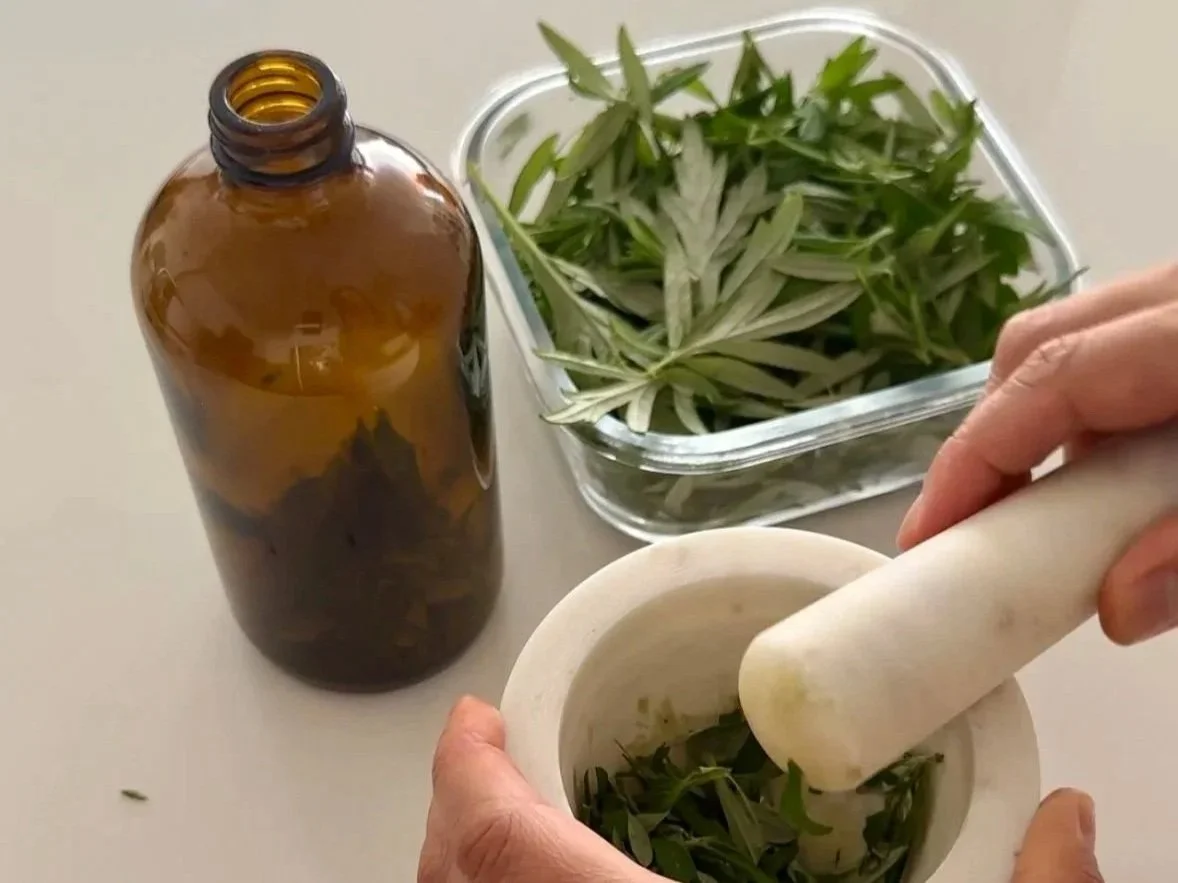
Wash gently and crush the plant. Using your mortar and pestle, gently crush the fresh mugwort to help release its oils and open it to the infusion. If it aligns with your beliefs you can whisper to the plant your intention for this work and ritual.
Combine. In your dark glass bottle, add 3 parts sesame oil to 1 part crushed mugwort.
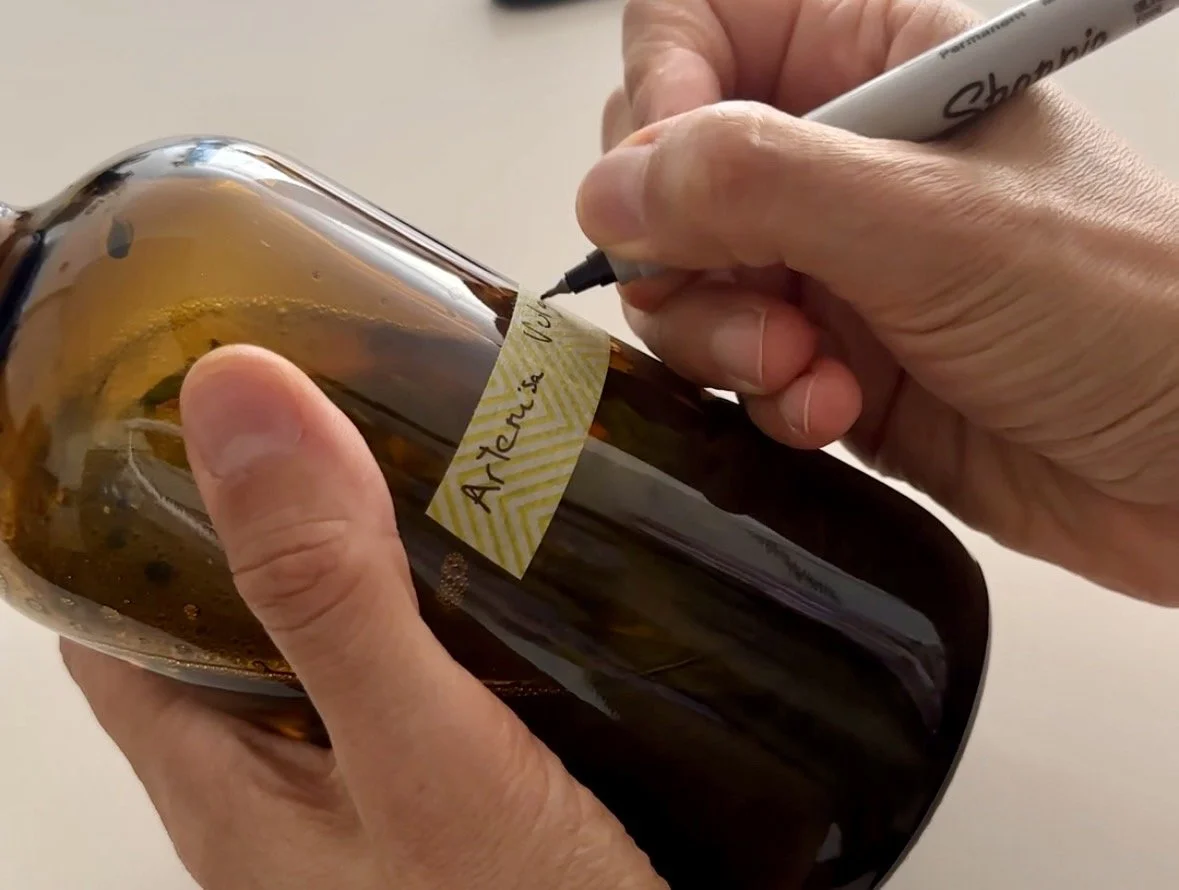
Label it. Write the date on the bottle so you can track your 30 days.
Shake daily. Every day for the next 30 days, shake the bottle lightly to keep the mixture moving and infusing. do not open the jar or use the oil.
Store. Keep the bottle in a dry, dark area, away from heat and light, for the full 30 days and beyond.
Finish and preserve. After 30 days, your oil is ready. Add a few drops of rosemary oleoresin extract to help slow oxidation and extend its shelf life.
Use with intention. Strain if you wish, and your oil is ready to be used—on yourself, or with your clients.
That's it! For me, the creation part of the oil is a ritual. I take my time, I connect with the plant, its aroma and texture, and start. I hope you have fun with the process, and if you have questions, let me know.