The Q'ero of Peru: An introduction to Q'ero cosmology and indigenous prophecy
Being back in NYC feels strange right now. As I return to my familiar corner desk in my apartment and use my laptop again, I can’t believe that not long ago I was in a place 4,300 meters above sea level (around 14,107 feet), high in the Andes of Peru, receiving my first Karpay under the Q’ero lineage.
I had waited for this moment for a long time, and it was beyond sacred and special, so simple and so profound.
This blog will give you a glimpse into the world of the Q’ero, their teachings philosophy and what it means to be an apprentice with them.
How it all started
It wasn't like one day I suddenly decided to study shamanism with indigenous elders. It has been a slow process of following signs and synchronicities, one that truly began during an Ayahuasca ceremony where I saw a rainbow growing within me, flowing all over my hands and body.
The message was always the same: you are nature, you hold the rainbow. It took almost two years until I truly understood that vision and why I was destined to learn from the Q'ero.
Since I started learning from indigenous elders I have found the answers to questions I had carried for years. I was never crazy, I was never losing my mind. I was simply being awakened to a higher consciousness, a new way of being.
The Q'ero Nation of Peru
The Q'ero are an Indigenous culture from high in the Andes. They live in remote areas close to the Apus (mountain spirits) and have been practising shamanism and living in harmony with Pachamama (Mother Earth) and the spirits of nature for millennia, since the beginning of time.
Some stories say that their teachings were transmitted directly from Tayta Inti (Father Sun). Others say that after the second ice age, beings from other worlds came to Earth to help humanity evolve. They taught us about architecture, astrology, energy and vibration, about the Earth and the body, and those teachings travelled around the globe, moving from the Middle East to Europe, Asia, and the Americas, where they rooted in the Andes.
The Q'ero refer to those beings from other worlds as our "first ancestors," and even today they are depicted in their beautiful textiles, honouring those beings of light.
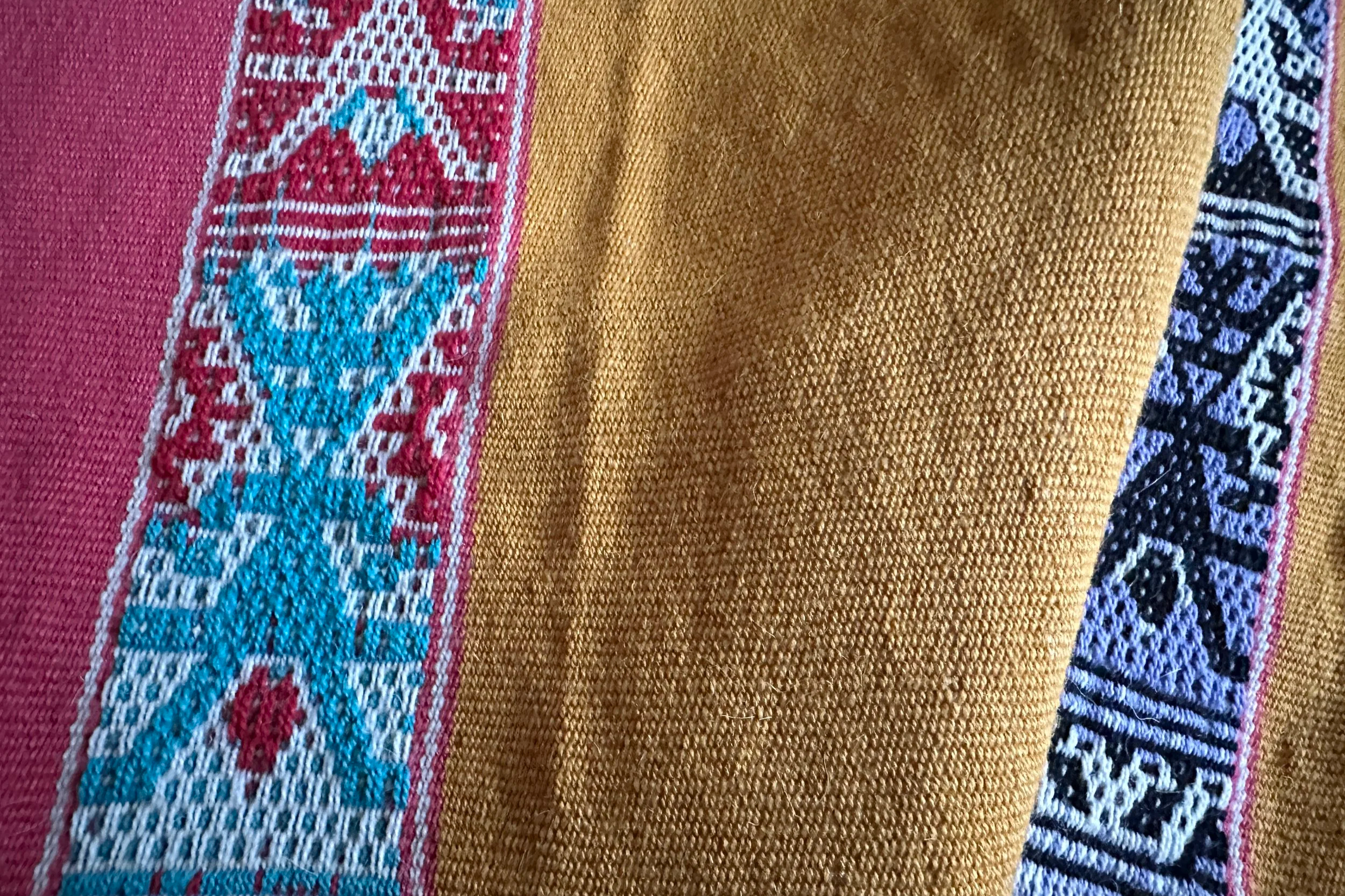
The Andean cosmovision—The three worlds
For the Q'ero, our world is divided into three worlds or realms of existence:
The Uhju Pacha — The underworld, realm of the serpent (Amaru), the subconscious, the hidden, the shadow, the parts of ourselves we often don't want to see.
The Kay Pacha — Our earthly world, realm of the puma (Otorongo), our physical life, our bodies, emotions, mundane life, the Earth itself and all creation.
The Hanaq Pacha — The upper world, realm of the condor and eagle, of nature spirits, mountains, high-vibrational energy (sami), beings of light, rainbow bodies, galactic beings, ascended masters, and angelic realms.
Everything is about duality and balance, masculine and feminine, death and birth, darkness and light, and even their ceremonies reflect this duality.
I learned that no matter where I live or which city I visit, animal spirits are always communicating with me. I only have to pay attention and let the land know I'm there. Even in a city with no condors around, I connect with the energy of the eagle and the hawk. Wherever I travel, I connect with the animals that inhabit that land.
Believe me when I say that once you understand shamanic principles, there's no going back to a "traditional" lifestyle—whatever that means for you.
The energy of their practice
In their teachings, my maestros speak about energy and how the energetic world works within their cosmovision (their way of seeing the world).
For the Q'ero and other shamanic lineages, we humans are part of all creation. We are not separate from nature, animals, plants, stones, or trees—we are one with them.
Everything has a spirit, and the world around us is always communicating with us. There's a sense of reciprocity (ayni) and cycles of giving and receiving, which allow everything to flow in harmony and balance.

Despacho offering to the land, Pachamama
For the Q'ero, there is no right or wrong, no good or bad, only orderly and disorderly energy, also called light and heavy energy. Energy is perceived differently depending on the resonance we hold within our energy field (biofield) and physical body. What feels heavy to you might feel light to me, or vice versa.
A notable difference between the Q'ero and other Peruvian shamanic lineages, like the Shipibo-Conibo, is that the Q'ero don't use plant medicines to connect with the spirits. Instead, they cultivate a direct connection.
We learn to enter deep meditative states to shift consciousness and access information and it is this direct energetic transmission that informs the foundation of the energy healing work I carry into my practice today., and that's why, to me, the Q'ero are truly masters of energy.
The Karpay initiations
Studying with the Q'ero is nothing like attending a structured school.
There are no textbooks. We simply listen to the maestro speak, take notes, and ask questions. They teach from the heart, sharing wisdom that has been passed down from their parents and elders. It's up to us to interpret, understand, and apply these teachings in daily life.
During the apprenticeship with the Q'ero, we receive three Karpays in a specific order:
Munay — "To love." Connected to the heart. Love and compassion.
Yachay — "To know." Connected to the belly centre, the power of intuitive knowing.
Llankay — "To work." Connected to the crown of the head, the strength of our light body and spirit, and our ability to hold space for others.
After completing the first part of the teachings, the student receives an energetic initiation, the first usually at Apu Ausangate in the Andes. There's no set timeline; the student decides when they feel ready. I received my Munay Karpay with Maestra Marqueza Apaza at Ausangate mountain, followed by a week in isolation for energy integration.
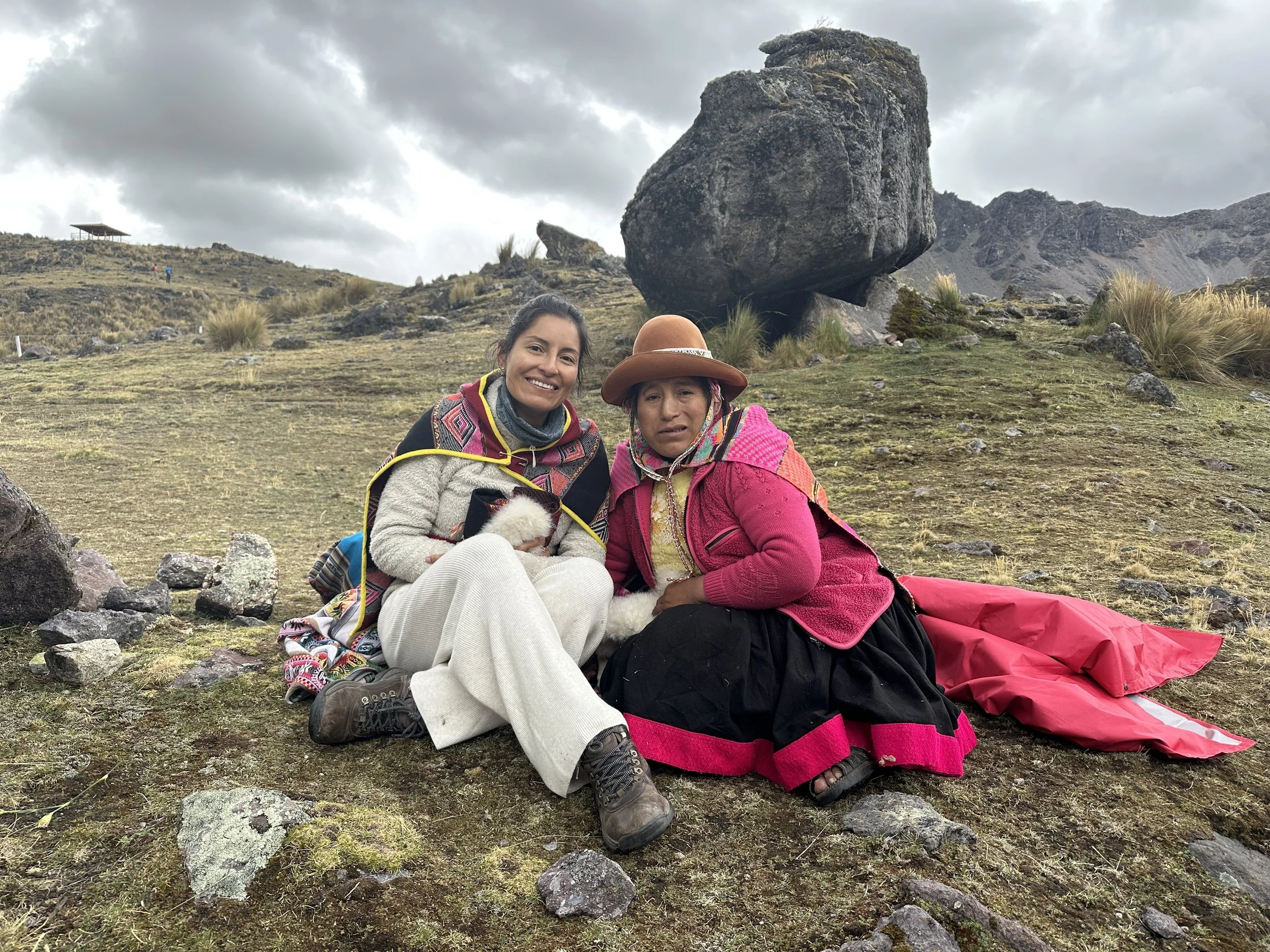
In my opinion, a shamanic path is a way of being, a lifestyle that chooses you more than you choose it.
It feels like a calling that comes from the deepest part of your soul and your connection with the earth. During shamanic training, we learn to understand subtle energies from others and our environment, and create ceremonies and rituals for Pachamama and the Apu spirits all grounded in direct experience with the living spirit of nature.
Living the prophecy: The time of the Pachakuti
When the conquistadors arrived in the Andes in the 16th century, the Q'ero retreated high into the mountains to protect their teachings. It's said that the spirits of nature and the first ancestors warned them.
It wasn't until the late 1950s that they came down from the mountains to share a prophecy—that the world was transforming and it was time to share the earth wisdom they had safeguarded for centuries, to help humanity evolve, to awaken the rainbow body, and to reconnect with the Earth.
In the Q'ero tradition, the Pachakuti is a powerful prophecy that speaks of great transformation and the turning of an age. The word Pachakuti comes from Pacha (Earth, time, space, cosmos) and Kuti (to turn, transform, or return). It signifies a great upheaval, both destruction and renewal, where the world is set right again after a period of imbalance.
The Q'ero have long spoken of this time as the Taripay Pacha, the age of "meeting ourselves again"—a return to harmony, unity, and balance between humanity and nature. They say that we are now living through this great shift, where old structures collapse so that new ways of being can emerge.
To my surprise, when I first heard about this prophecy, something within me felt it was true. It just made sense—and with the rapid change in technology and the explosion of A.I. I feel we are literally living the prophecy.
The Q'ero also speak of the Prophecy of the Rainbow Warrior and of the Condor and the Eagle, both connected to humanity's shift in consciousness and the rebirth of unity between indigenous and modern worlds. Sounds familiar? Many psychics and channels have been talking about this in the last couple of years, they talk about the ‘New Earth’ and the mass awakening of humanity consciousness.
These prophecies remind us that the future of humanity depends on the balance of the feminine and masculine energies and our reconnection with ancestral wisdom and the living Earth.
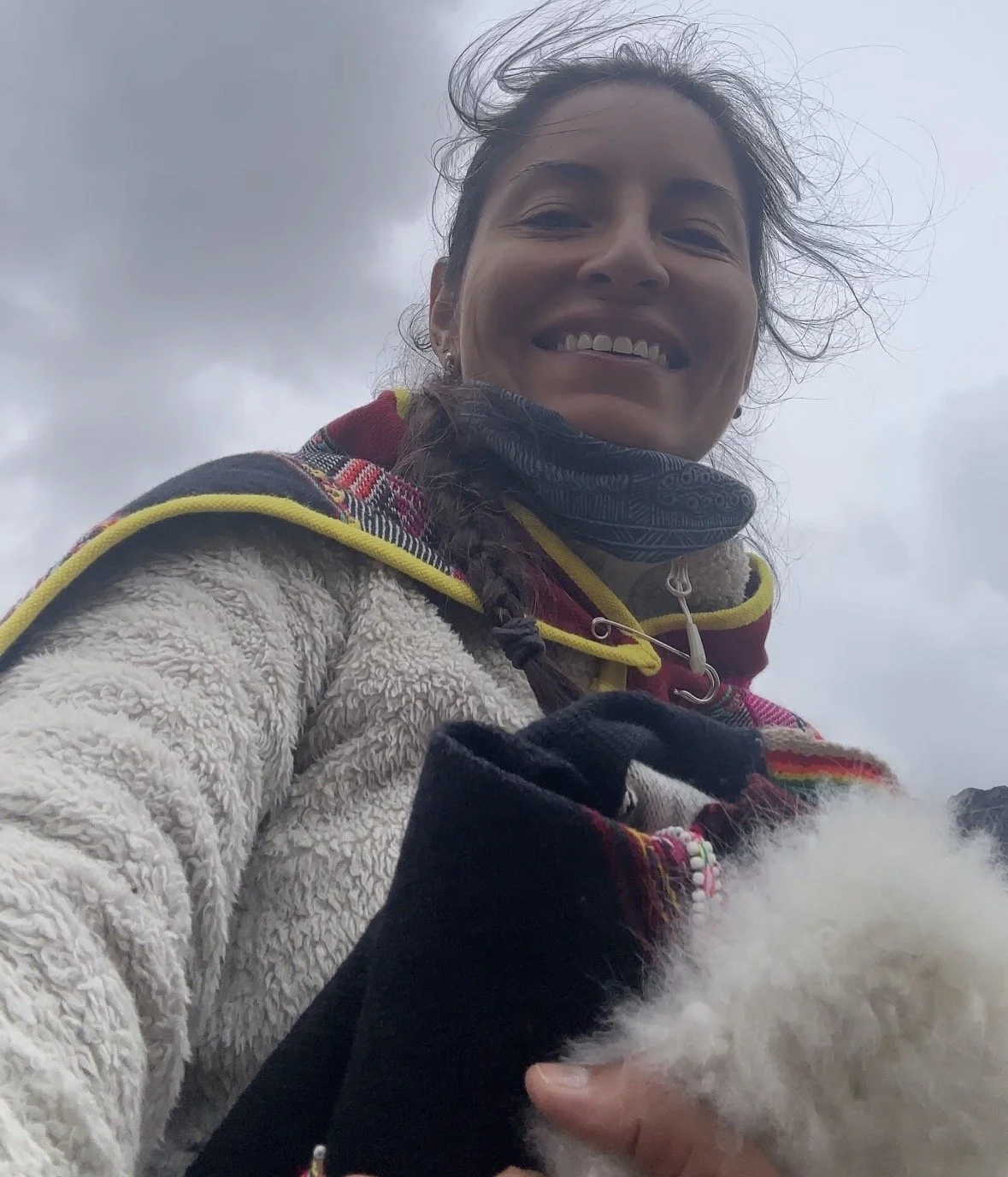
What does this mean for us today?
We are witnessing a time of spiritual awakening, where many feel called to reconnect with nature, remember ancient wisdom, and live in greater alignment with their true essence. The Earth is not separate from us, we are part of her, and she is asking us to remember that.
The Pachakuti invites us to heal our relationship with nature, recognising that the Earth is alive and that we are her stewards, not her masters.
It asks us to transform fear into wisdom, letting go of old paradigms of separation, scarcity, and control. To embody reciprocity (ayni)—living in sacred exchange, giving as much as we take, and acting with love and integrity. And to step into our power, honouring our unique gifts and bringing them forward for collective healing and transformation.
The Earth is calling for conscious guardians, those who remember that everything is interconnected. She asks us to listen to her rhythms and align with the cycles of nature rather than forcing our way through life. To live with reverence, treating every action as sacred. To heal our own wounds, because when we heal ourselves, we heal the collective. And to build community. We are not meant to walk this path alone; we are meant to find like-minded people, our tribe and grow together.
The Pachakuti is not just a prophecy, it is an invitation. A call to return home, to remember, and to co-create a new world that reflects the deep wisdom of the Earth.
Bringing the sacred into the everyday
Being back in city life after receiving my Karpay initiation felt like stepping between two worlds. The city is so different from the stillness and slowness of the Andes, yet the teachings of the Q'ero continue to live within me.
I often find myself pausing in the middle of my day, remembering the mountains, feeling the presence of the Apus and the rhythm of Pachamama even surrounded by concrete.
And here is where the real work happens. As my maestros have said:
It's very easy to be at peace and connect with spirits in solitude and surrounded by mountains and silence. The real work is bringing that energy to where the chaos is, where that high-vibrational energy is needed, and being able to hold space for others.
It's about bringing the sacred into the everyday—carrying those teachings into our relationships, our work, and the way we create and move through life.
If you feel called to receive these teachings or work with this energy, you can explore Munay-Ki Rites initiations or energy healing sessions with me.

During integration time, in isolation in Pacchanta, Cusco.