My 20 Days deep in the Amazon—What is a Shipibo-Conibo Master Plant Dieta?
I spent 20 days in a Shipibo-Conibo community learning from a curandero—the main Shipibo shaman. To say that my life has forever changed is an understatement.
If you are curious or interested in a Master Plant Dieta process, the commitment and my experience, this is for you.
What is a Shipibo-Conibo Master Plant Dieta?
I was curious to see how learning from the Shipibo could overlap with my current knowledge of shamanic principles under a different Peruvian lineage. Before the Shipibo, I had been studying with the Q'ero Nation from the Andes—another shamanic lineage from Peru. The jungle had been calling me for a while in visions and synchronicities so I was curios and excited to go to this retreat.
I arrived in the jungle with an open mind and not really knowing what to expect. I decided, in purpose, not to do too much research or ask too many questions because I didn’t want to have preconceived opinion or expectations. I just knew I needed to be there. But let's start from the start.
Who are the Shipibo-Conibo?
The Shipibo-Conibo are an Indigenous people of the Peruvian Amazon, known for their shamanic traditions, elaborate geometric art, and sacred songs (icaros). They have lived in that area for millennia, traditionally along the Ucayali River, with a rich culture deeply connected to the natural world, particularly through their use of plant medicines, Ayahuasca and sacred Tobacco.
They have been around since the beginning of time, and when Christianity took over Peru, their culture was almost lost. Gratefully, they survived colonisation, and from around the 1960s they have been recovering.
Today, more than ever, their culture is very much alive. People travel from all around the globe to learn, heal, and transform their lives through their teachings—and I was able to witness both their work and my own self-transformation.
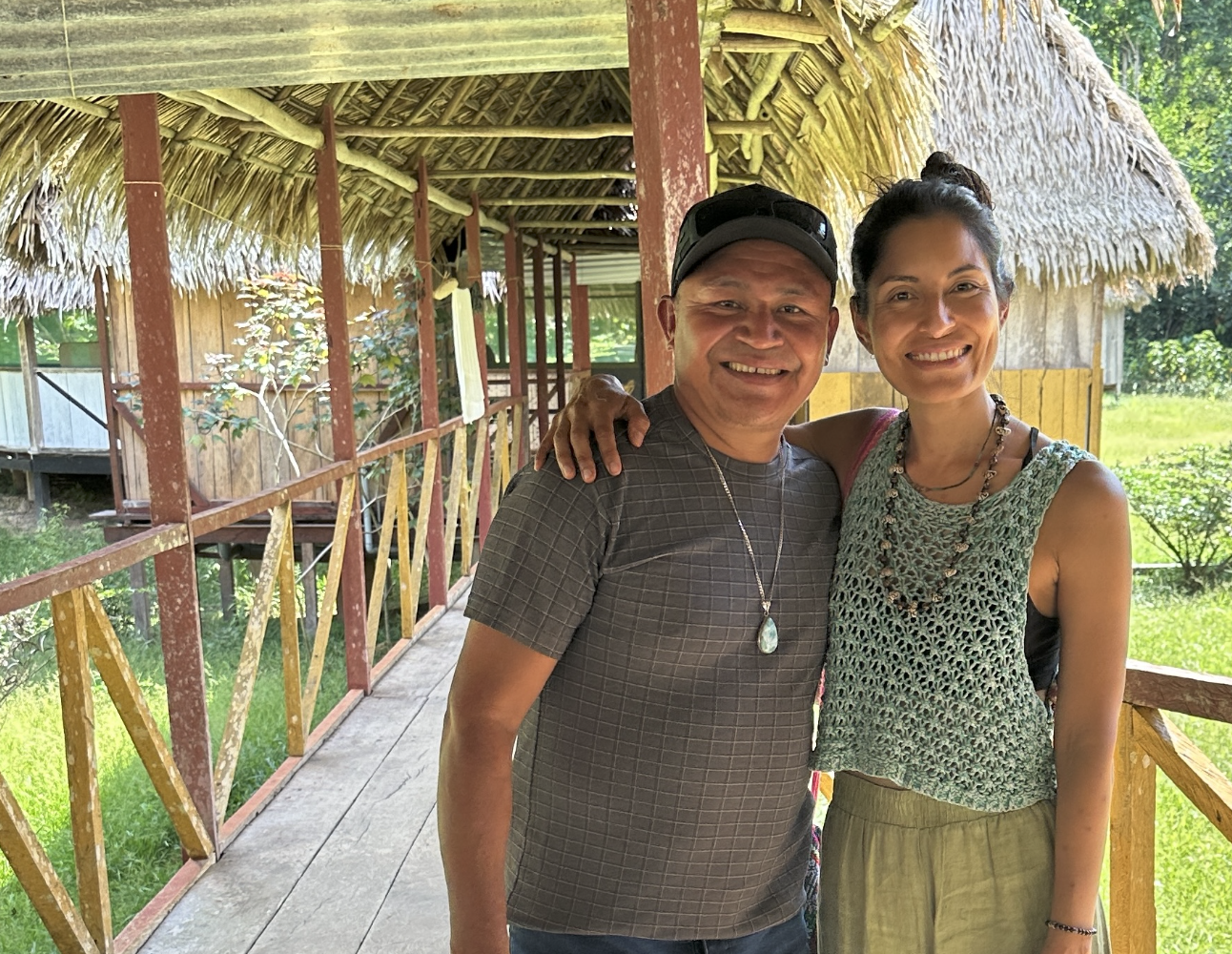
With my maestro.
As a Peruvian, am I related to them?
Short answer: no. My family is not Shipibo—but my dad's lineage and all my ancestors before him came from that region (Iquitos and the Ucayali River). This is the reason I went there: I felt the call of my male ancestors and the jungle itself. That call had been in my awareness for about a year before I decided to immerse myself in a Dieta journey.
Not all Peruvians are indigenous. I personally have an Indigenous-Spanish-Middle Eastern background, and to my knowledge, even though my dad's family is from that same region, they are not connected to the Shipibo or any other tribe. They are part of the Peruvians who were deeply colonised. Nothing bad in saying it—it is the truth.
Nowadays, most Peruvians are not connected to indigenous teachings in any way. To my surprise, at the Shipibo centre I encountered French, Germans, Americans, and Mexicans. I was the only Peruvian non-Shipibo person there.
What is a Master Plant Dieta?
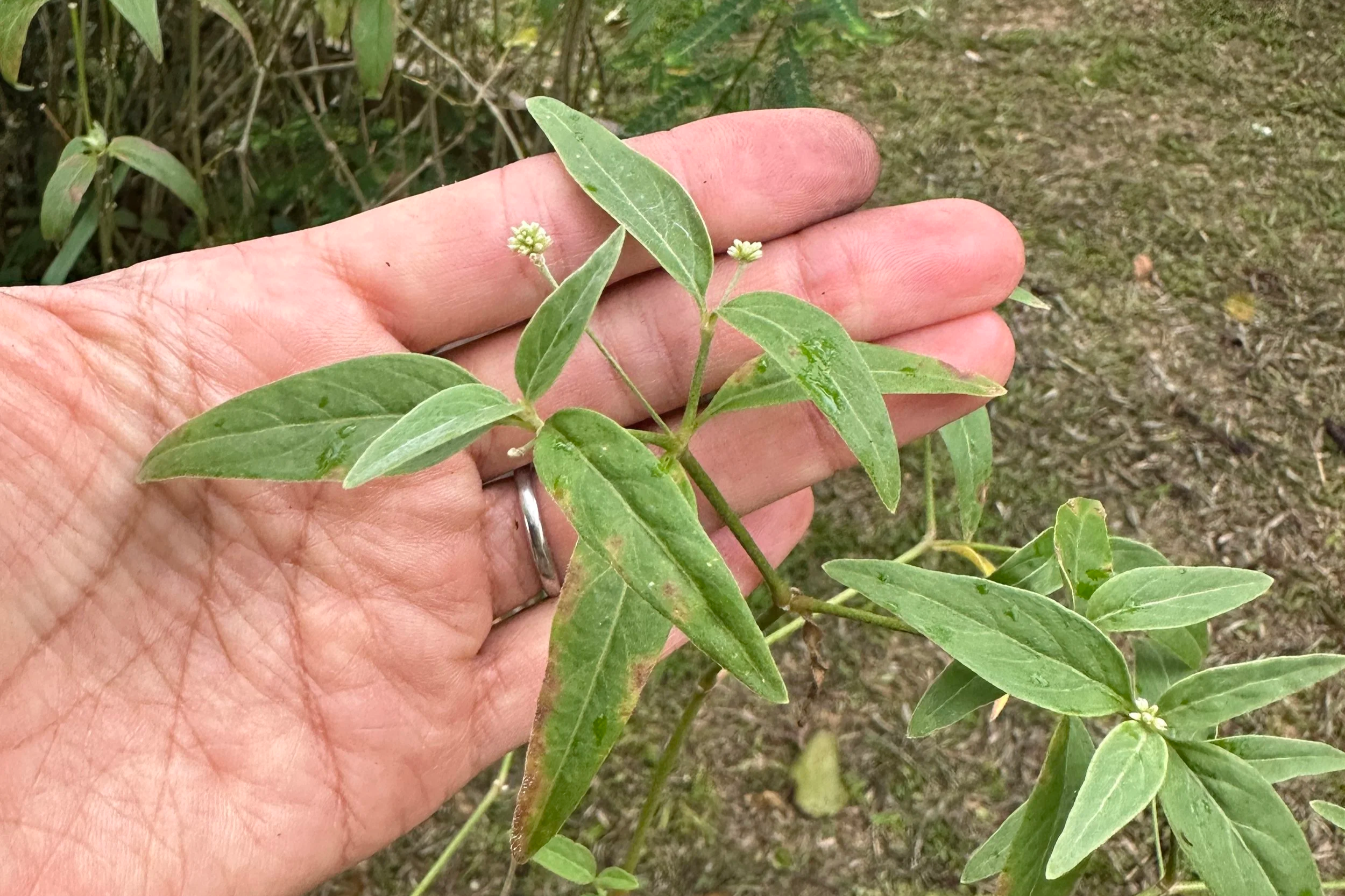
Marusa Master Plant
A Dieta (Spanish for "diet") is a rigorous process of forming a deep, personal, and lasting relationship with the conscious spirit of a specific master or teacher plant. In my case, I dieted with Marusa—a beautiful, small, soft-to-the-touch plant with tiny white, delicate flowers.
I personally feel that a Shipibo Dieta is not for everyone, as it involves deep commitment under the guidance of an experienced Shipibo curandero.
What does a Dieta process involve?
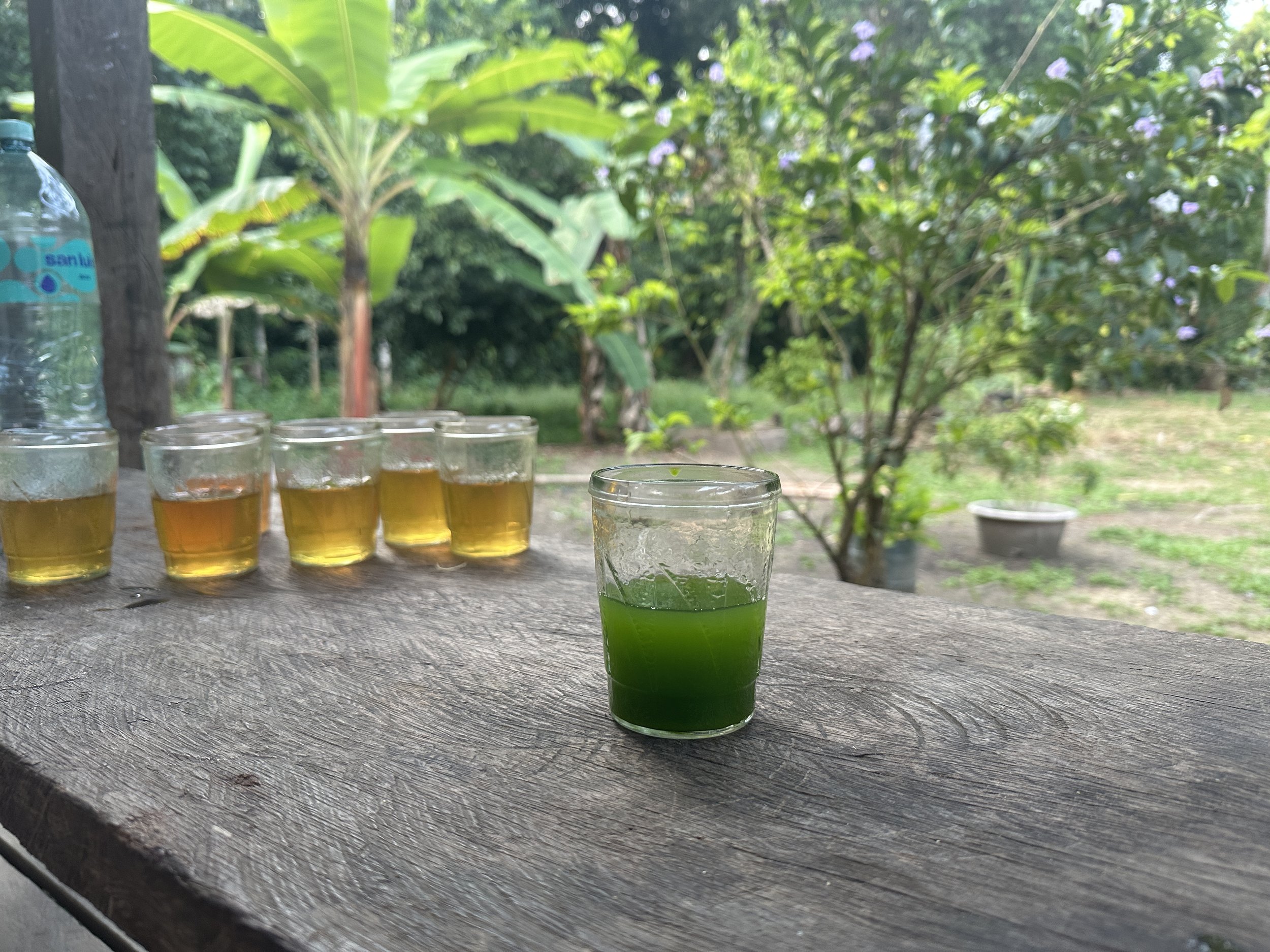
Marusa extract, Noya Rao extracts in the background.
Ingestion and communion with a master plant:
We regularly consumed an extract of the specific plant we were dieting with, as well as plant vapours, plant baths, and other medicine as we felt called. During my time in the Amazon I also ingested Chiric Sanango and Machinga for specific reasons.Learning to use a Shipibo pipe:
During our first class, I raised my hand and said—Maestro Rono, I have never smoked anything in my life, how am I going to learn how to blow smoke to myself with a pipe? He chuckled and said: you will. A week later, I was using my pipe and wanting to commune with my master plant teacher.
Sacred Tobacco is the bridge that helps us create a connection with the plant realm. We don't smoke Tobacco—we blow smoke (soplate: from the Spanish verb soplar—to blow) the smoke, which is very different.Strict dietary restrictions:
The "dieta" part refers to abstaining from specific foods including salt, sugar, oils, spices, red meat, and dairy, as these are believed to interfere with the subtle energies of the plant and the healing process. We also commit to letting go of pork and any by-products for the rest of our lives.Modern product restrictions:
We commit to being as natural as possible during the Dieta process. We can shower and brush our teeth of course but we let go of shampoo, conditioner, creams, toothpaste, deodorant, repellent (that was a test for me!), makeup, nail polish, and so on. Everything we usually use on our bodies. It's about being as natural as possible when connecting with the master plant and allowing our spirits to integrate.
I chose to put my phone on aeroplane mode for the duration of my dieta, though I did document my process through photos and videos. Some participants chose to be completely off technology.
Note: I have to say it was challenging during the first few days, especially not being able to talk to my family or husband but I was amazed by my own ability to adapt and commit to what I was there for. I was totally devoted to my Dieta. I didn't make it a huge deal, I simply followed what I was meant to do rigorously. And I'm grateful today for my own commitment because a couple of months on, I can say that we were in a bubble where time and space didn't exist, where plants and spirits were with us, and it was deeply, profoundly touching and transformative.

Lifestyle restrictions and isolation:
We followed strict behavioural guidelines including sexual abstinence and minimal social interaction, this involved complete or voluntary isolation in our tambo (jungle hut). Some of us chose to be in silence for a period of time or fast beyond the required two days. I chose to fast for three days and be in silence for three days.
This is done to minimise energetic and emotional distractions and heighten sensitivity to the plant's teachings.Shamanic guidance:
Our Dieta process opened and closed with Ayahuasca ceremonies and healing songs (icaros) performed by the curandero. These songs establish a connection with the plant spirit and offer protection. During ceremonies, Maestro Rono called in the plant spirits with his icaros.I was in awe of the amount of energy Maestro Rono was able to hold. It was one of the most amazing experiences of my life, to be in the presence of an experienced Shipibo maestro, perceiving the energy and listen to his songs in ceremony.
Integration is extremely important:
Like any other shamanic practice, this is a chosen lifestyle and the process continues to unfold as time passes. The learning and healing continue for weeks, months, or even years after the formal Dieta period ends, requiring a gentle reintroduction to normal life and continued self-reflection.
What is the purpose?
The primary goals of the master plant Dieta are deep, holistic healing, spiritual awakening, and learning sacred knowledge directly from the plant realm. In my case, I wanted to connect with my male ancestors, commune with the energy of Madre Selva (the Amazon rainforest), and learn from the Master Plants.
In shamanism, we believe in the interconnection of all beings—everything has a spirit, energy, and wisdom. So the shamanic principles were not foreign to me. However, learning from my Shipibo master curandero deepened my understanding of energetics from an Indigenous and ancestral wisdom point of view—specifically around frequency, vibration, and how to manage energy.

What I feel are the main benefits
Physical and emotional healing:
The plants work to purify the body, mind, and spirit—helping to resolve physical conditions, emotional trauma, and psychological struggles by addressing their energetic roots. In my teachings and coaching sessions I always refer to the body as our vehicle, a biological machine, our tool to access different states of consciousness. The plants helped us clear our channel and our bodies to connect more deeply with them.Deep spiritual connection:
It fosters a profound, lifelong connection with the spirit of the plant, which acts as a guide, teacher, and protector. This connection also deepened my energy healing practice in ways I could not have anticipated."Learning and wisdom:
Through dreams, visions, and intuition, we received insights, self-understanding, and sometimes even sacred healing songs (icaros) directly from the plant spirit. Believe it or not—I channelled a song for Marusa one morning.Personal transformation:
The process is challenging, I won't lie. We are encouraged to recognise our own shadow and deep wounds, deconstruct our ego, and make profound, lasting changes in our lives to live in greater alignment with our higher self and nature.
Returning to 'normal' life after a Dieta process
It is my belief that personal growth requires solitude.
We change, we transform, and we experience things that we sometimes cannot share simply because they are too profound or too complex to explain.
Over the years I've learned to share parts of my journey with some of my closest friends and family, not with everyone and that's okay. My husband is the only one who knows it all: the crazy, multidimensional, out-of-this-world, believe-it-or-not experiences even if he cannot fully understand it.
As with any energetic process or shift, the real work starts when we return home—to our families and to the modern world.
I left the retreat with a question floating in my awareness…
How do we carry what we've learned, what we've experienced, and share it with the world in a way that truly contributes to people's lives, to the collective?
How can I honour my maestros, my guides and serve them from the modern world?
What now?

It's been less than three months since my Master Plant Dieta was completed. I'm back in the big city and still easing back into my "normal" business life. It still brings deep, loving emotions and excitement when I think about my time in the jungle—even writing this blog brings those feelings back, my heart dances. At this point in my life I don't know if I will return to the Amazon anytime soon or ever but I'm open. I'll pay attention to the signs and follow the path as it unfolds.
I feel that my understanding of energy, vibration, consciousness, emotions, and frequency is much deeper now. The plants showed me ways to understand and explain complex shamanic and energetic concepts in a simple and practical way—and I'm excited to share what I've learned when the time is right.
If you feel called to go deeper, I offer energy healing sessions rooted in these same principles. Or if you're just beginning to explore, start with the free resources.