Sound healing, vibration and frequency: How sound supports energy healing
If you haven't experienced a sound bath yet, you have no idea what you are missing out on.
Sound is one of the oldest healing tools on Earth. And in my practice, it is the thread that quietly runs through everything I do, from Womb massage to shamanic ceremony, from Reiki to Access Bars.
In this blog I want to share not only what a sound bath is and how it works, but why I believe sound is one of the most accessible and powerful entry points into energy healing available to us today.
Where do sound baths come from?

Sound baths are waves of soothing, echoing sound, a meditative practice involving the use of resonant music that has been around for centuries.
Common instruments used during a session include Tibetan singing bowls, crystal singing bowls, ocean wave sounds, bells, chimes, and even the human voice. I have also attended sound baths and circles where practitioners mix native flutes, guitar, Peruvian charango, Australian didgeridoo, and other shamanic instruments.
It's truly an amazing experience.
As for the exact origins, the precise roots of both singing bowls and sound baths remain a topic of debate. What we do know is that sound as a healing tool has existed across cultures and traditions since the beginning of recorded history—from ancient Egyptian temples to Tibetan monasteries, from Indigenous ceremonial circles to Greek healing sanctuaries. Sound has always been medicine.
How does a sound bath work?
The instruments create an immersive sound that fills the room and the body, helping you relax and let go of stress, anxiety, and the worries that may plague your mind.
I incorporate sound into most of my sessions and the reason is simple. The vibrations help you become grounded and present straight away. They connect you with your body in a way that words alone cannot.
The practitioner uses one or several instruments to create soothing, overlapping vibrations, leading you deeper into a state of contemplation or relaxation and gently switching off your body's fight-or-flight response. At the end of a session you are guided back to a feeling of awareness before the sound bath concludes.
Sound and the energy centres—Why vibration goes straight to the body
We are vibrational beings. Every cell in our body vibrates at a specific frequency, and our energy centres. From the root at the base of the spine to the crown at the top of the head, each hold their own energetic resonance.
Sound bypasses the thinking mind. It doesn't ask for your permission or your belief—it simply enters the body and begins to move energy. This is why even the most sceptical person in the room will often be the one who falls the deepest into relaxation during a sound bath. The body knows.
Different instruments and tones naturally resonate with different energy centres. Lower, deeper tones—like a large Tibetan bowl or a drum—tend to vibrate through the lower body, the root, the sacrum, the gut. Higher, more crystalline tones—like a crystal singing bowl or a bell—tend to rise up through the chest, the throat, the crown. A full sound bath, with its layered frequencies, moves through the entire energy field like a wave clearing, balancing, and restoring.
This is not just poetic language. It is something I witness in my clients session after session.
How sound complements every healing modality
Over the years, sound has become the thread that quietly weaves through every aspect of my practice. Here is how I use it and why.
Sound and ‘Sobada’ Womb Massage
During womb massage, my focus is on the sacral centre, the seat of creativity, sensuality, and feminine power, as well as the heart and the throat—themes explored deeply in the Reconnect with your Feminine online course. These three centres are deeply connected: when the womb carries unexpressed emotion, the throat often closes. When the heart is guarded, the sacrum tightens.I often open or close a womb massage session with sound, a singing bowl placed near the sacrum, or gentle toning to invite the throat to soften. The vibration reaches places that hands alone cannot access. It signals to the nervous system that it is safe to let go.
Sound and Reiki
Reiki works with the full spectrum of energy centres, channelling universal life force energy through the entire body. Sound and Reiki are natural partners because both work in the energetic field, both require the receiver to simply receive, and both deepen the state of relaxation that allows healing to occur.If the client chooses to and I combine the two, the sound creates an energetic container—a kind of sonic cocoon—that holds the client in a deep receptive state while the Reiki flows. Clients often report going somewhere between sleep and waking, a space where deep integration happens.
Sound and Access Bars
Access Bars works specifically with the energy field of the mind, 32 points on the head that hold the electromagnetic charge of our thoughts, beliefs, and limiting patterns. The primary centres activated during a session (but not limited) tend to be the crown, the third eye, and the root, mind, intuition, and groundedness.Sound at the end of an Access Bars session helps quiet the mental noise before we even begin. It's like clearing the static before tuning into a signal. Clients arrive busy, rushed, thinking about their to-do list and even a few minutes of sound shifts them into receptivity almost instantly.
Sound and shamanic work
In shamanic traditions, sound is sacred ceremony. The drum is the shaman's allie—the vehicle for journeying between worlds.In my workshops, talks, and ceremonial gatherings, I almost always close with a sound bath. It serves as a collective reset, a way of integrating everything that has moved, shifted, or been released during the session. Everyone leaves feeling held, grounded, and refreshed. There is something uniquely powerful about a group of people breathing together in the same sound.
Sound, in shamanic work, is not background music. It is medicine.
Private vs group sound baths
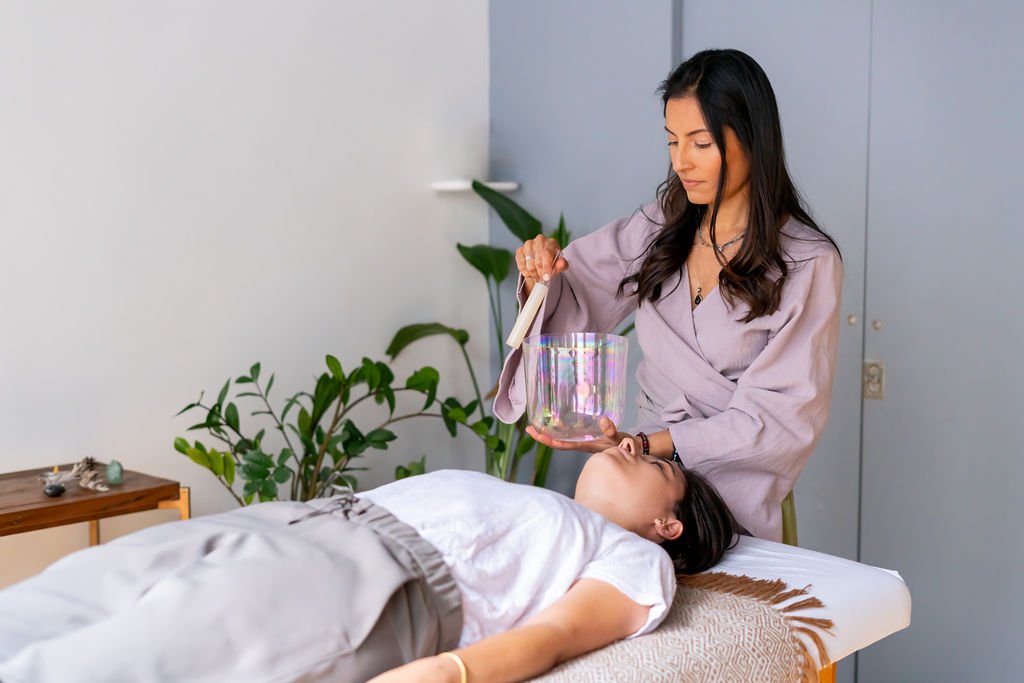
Aprivate sound bath is an intimate, personalised sound healing session tailored specifically to you ( now available in Sydney, Australia). Unlike a group session, a private experience offers a focused atmosphere where the practitioner can adapt the sounds to your specific needs and intentions, whether that's relieving stress, processing emotions, or supporting your wellbeing on a deeper level.
During the session you relax in a comfortable position while the practitioner uses instruments such as crystal singing bowls, gongs, chimes, or drums to create soothing vibrations and frequencies. It's an ideal choice for individuals, couples, or small groups seeking something deeply restorative and uniquely theirs.
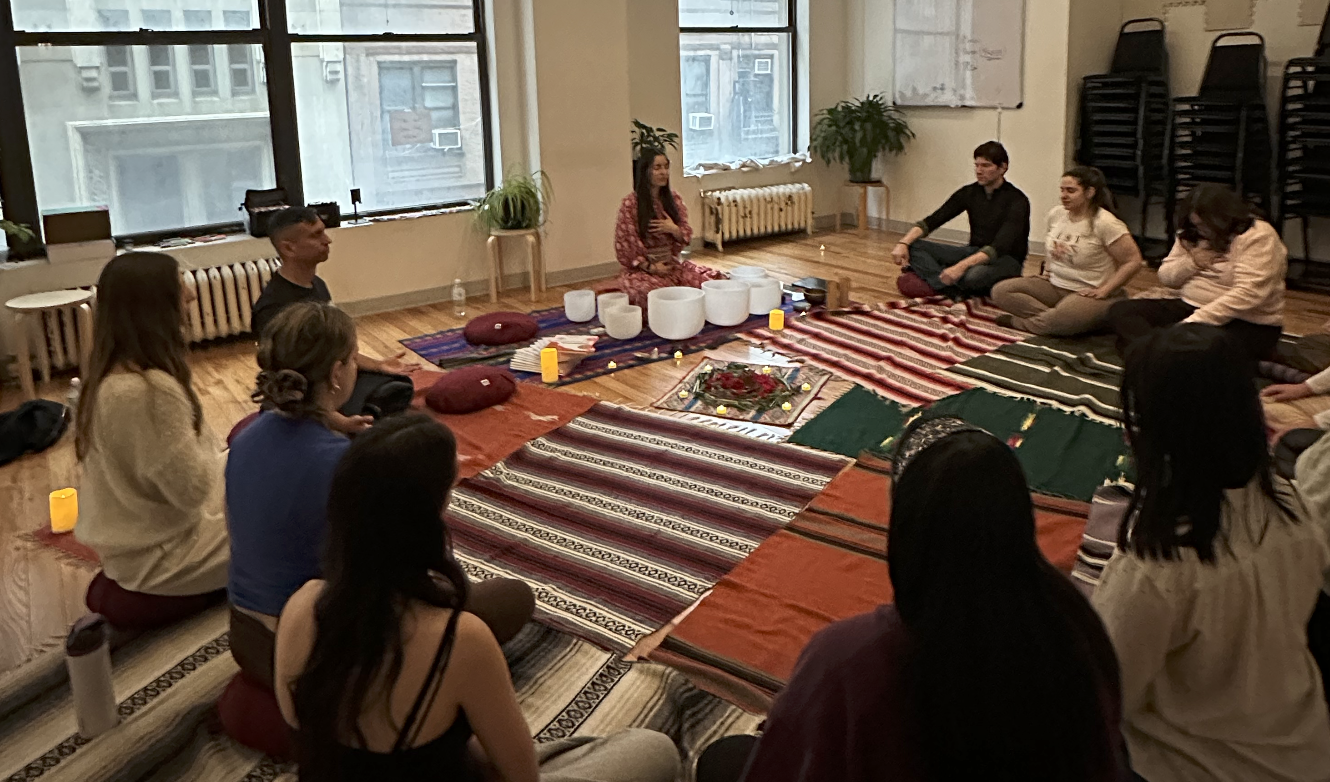
A group sound bath, on the other hand, offers a beautiful collective experience, there is something powerful about sharing that frequency with others in the same room. The energy multiplies. People often feel less alone in their healing when they experience it together.
You may wonder, how is this different from listening to relaxing music? A sound bath is specifically designed to complement a guided meditation. It's intentional and immersive—the practitioner is actively working with the energy in the room, not simply pressing play on a playlist.
The energetics of sound healing
According to sound healing traditions, the true healing potential of sound lies in specific frequencies. One of the most well-known is 432 Hz, sometimes called the "miracle tone", a healing soundwave that can be produced by tuning crystal singing bowls.
Sound healers work with these frequencies to support the alignment of energy centres and promote healing throughout the body. Beyond 432 Hz, there are many different frequency levels with healing potential, including the Solfeggio Scale, which has been used in Gregorian chants for centuries.
What I find most fascinating is not the numbers themselves but the lived experience of frequency in the body. You don't need to understand hertz to feel a singing bowl vibrate through your chest. The body understands sound in a language older than any science.
Can a sound bath replace meditation?
For some people, yes. A sound bath can be easier to access than other meditative practices because it doesn't require discipline or patience to begin. All you have to do is lie down, listen, and relax. The sound does the work of guiding your mind into stillness.
For those who find traditional meditation difficult, a sound bath can be a beautiful entry point into a deeper relationship with their inner world and from there, other practices often follow naturally.
Is a sound bath right for you?
A sound bath could be a wonderful fit if you:
Feel comfortable meditating or would like to try it
Are interested in group or collective healing experiences
Are open to the effects without expecting a miracle
Are curious about energy healing but not sure where to start
Some people may find sound baths less suited to them if they:
Find intense or layered sounds stressful or overstimulating
Have noise sensitivities or hearing aids, as the sounds can be quite immersive
Are navigating a mental health condition—it's worth speaking with a doctor first, as sound baths can bring up both pleasant and unexpected feelings
Sound baths are not a replacement for medication or therapy with a licensed mental health provider when treating anxiety or depression. The primary result is deep relaxation, making them a worthwhile complementary addition to any healing path.
Are there proven benefits?
If you're curious about the research behind sound healing, here are some studies worth exploring:
Exploring the healing power of singing bowls: An overview of key findings and potential benefits
Effects of singing bowl sound meditation on mood, tension, and wellbeing: An observational study
The human health effects of singing bowls: A systematic review
Impact of himalayan singing bowls meditation session on mood and heart rate variability
The research is still growing, but what thousands of people around the world already know is that the wave of vibrations—Sound healing is increasingly recognised as a powerful complement to holistic healing practices offering deep relaxation, and the sense of coming home to your body is something truly unique.
Sound is woven through everything I offer—from womb massage to shamanic ceremony to energy healing sessions. If you feel called to experience it, book a session or explore the free resources to begin your journey.